Page 26

EKS vs. ECS: orchestrating containers on AWS
AWS announced Kubernetes-as-a-Service at re:Invent in November 2017: Elastic Container Service for Kubernetes (EKS). Since yesterday, EKS is generally available. I discussed ECS vs. Kubernetes before EKS was a thing. Therefore, I’d like to take a second...
Read more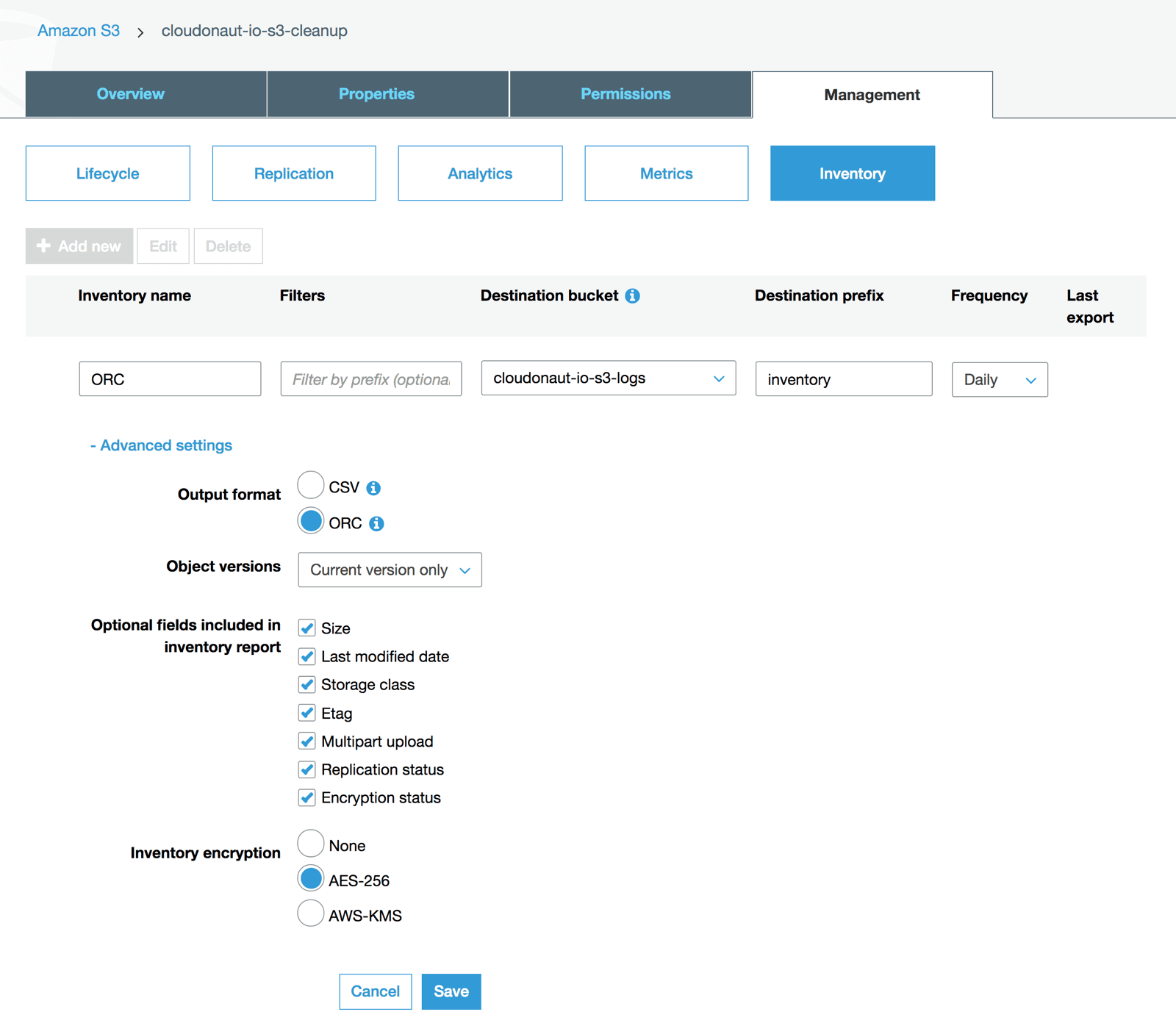
Cleaning up an S3 bucket with the help of Athena
Imagine your basement or attic would provide unlimited capacity for storing stuff. Sounds great? Maybe at first. But imagine how many stuff would pile up over the years if you were not forced to clean up your stuff because of limited storage space every...
Read more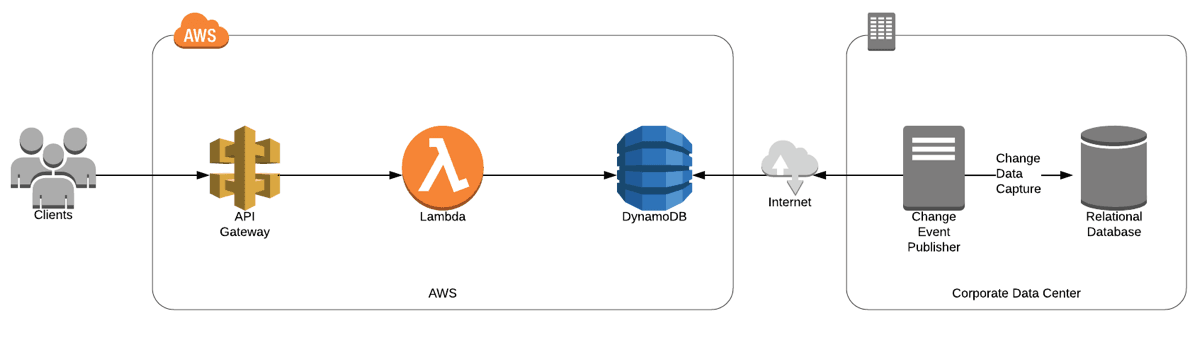
Cloud adaption strategy: event-based data synchronization
Are you building an application for the cloud without the slightest dependency to an on-premises infrastructure? Lucky you, most of us are struggling with uniting an outdated on-premises infrastructure with the shiny cloud. I’d like to share a cloud ada...
Read more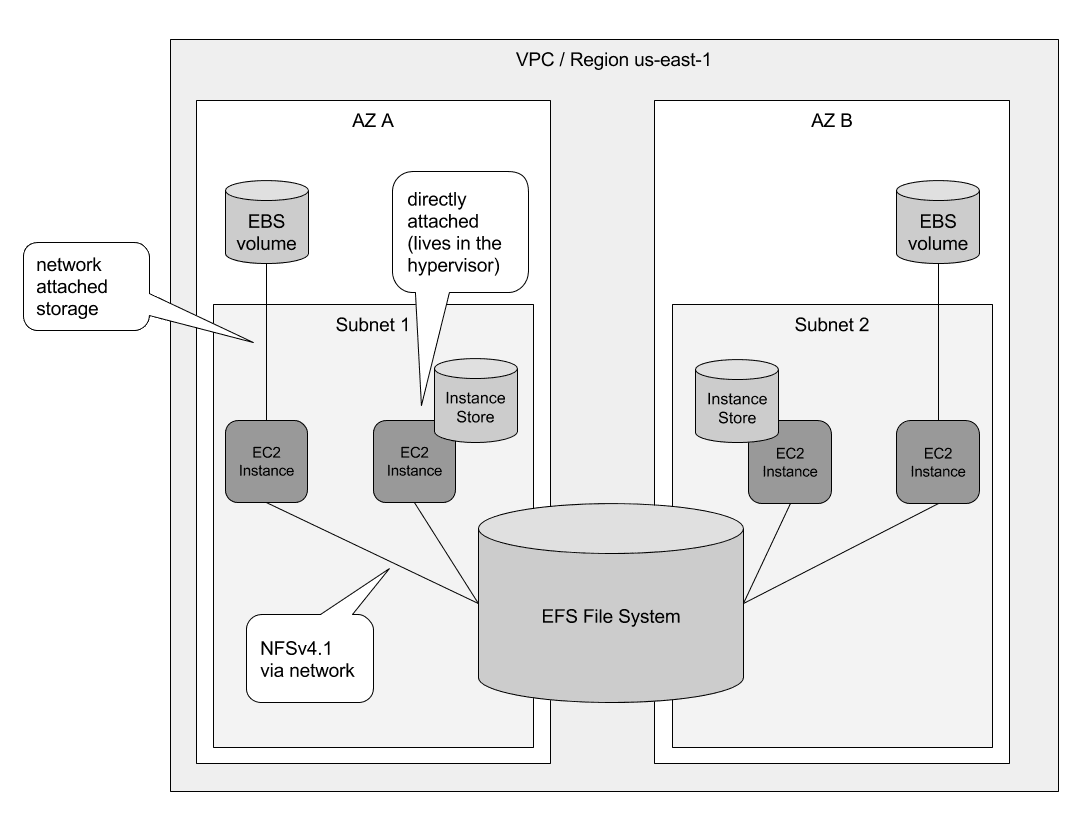
Sharing data volumes between machines: EFS
Many legacy applications store state in files on disk. Therefore, using Amazon S3, an object store, is impossible by default. Using block storage might be an option, but it won’t allow access to files from multiple machines in parallel. Hence you need a...
Read more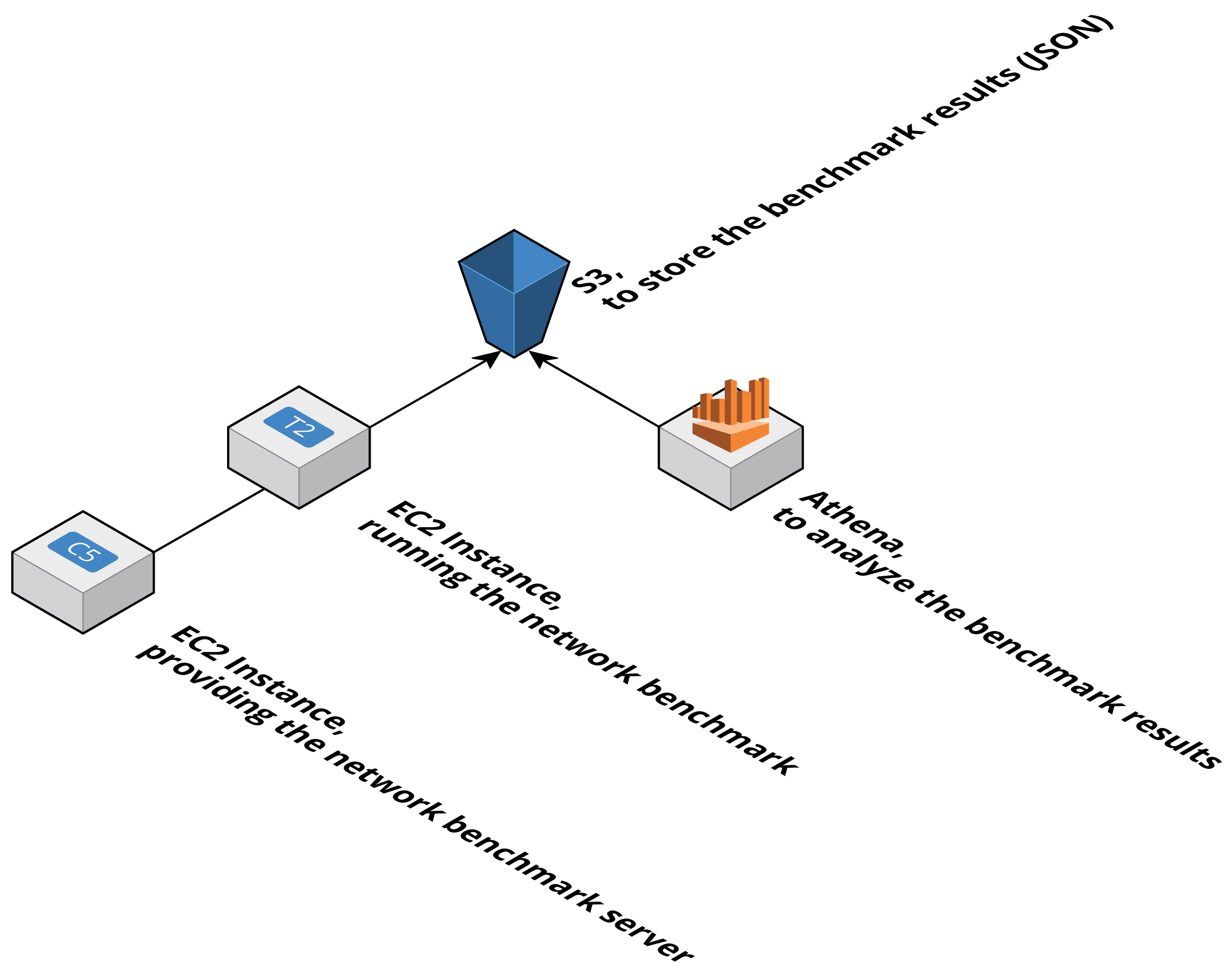
Behind the scenes of the EC2 network performance benchmark
What is the maximum network throughput you can expect from an EC2 instance of type t2.large? How much does the network performance increase when switching from a t2.large to m5.large instance? All these kind of questions are hard to answer, as AWS does ...
Read more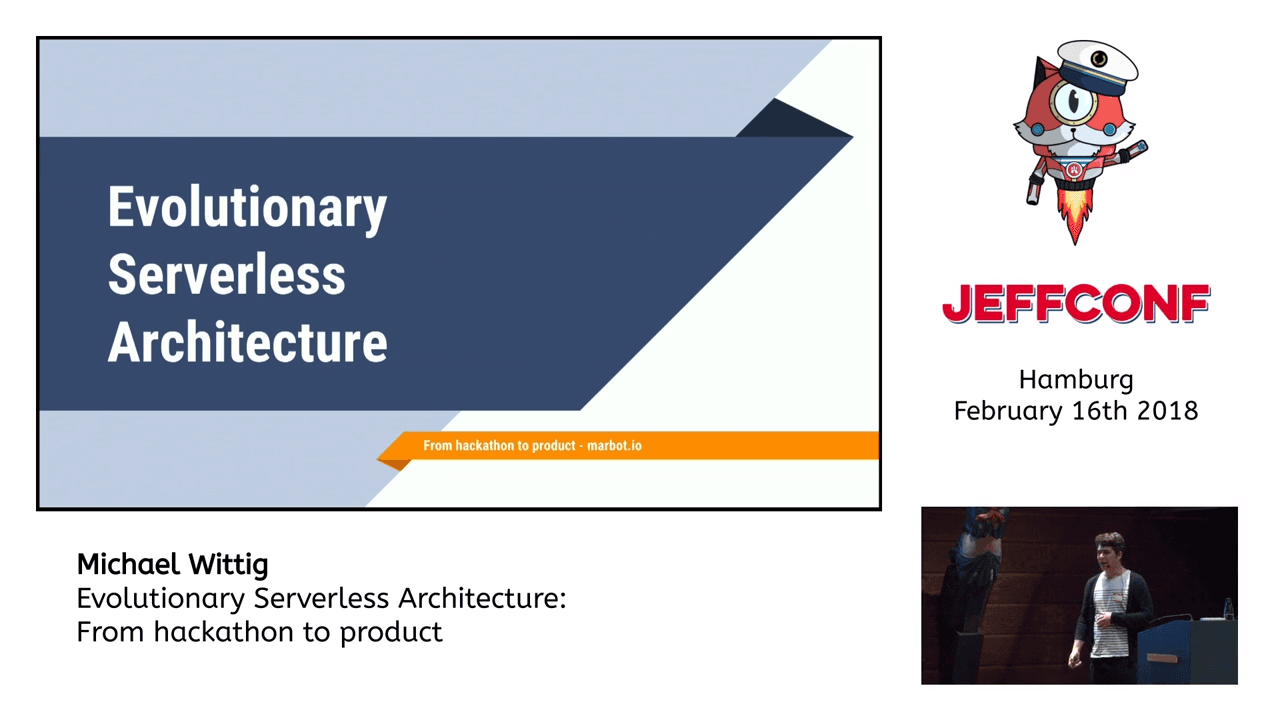
Evolutionary Serverless Architecture: JeffConfg Hamburg 2018 talk
I want to share my JeffConf Hamburg talk with you: Evolutionary Serverless Architecture A system architecture often struggles to adapt to new requirements. Serverless architectures can evolve because the small building blocks are easier to replace. I d...
Read more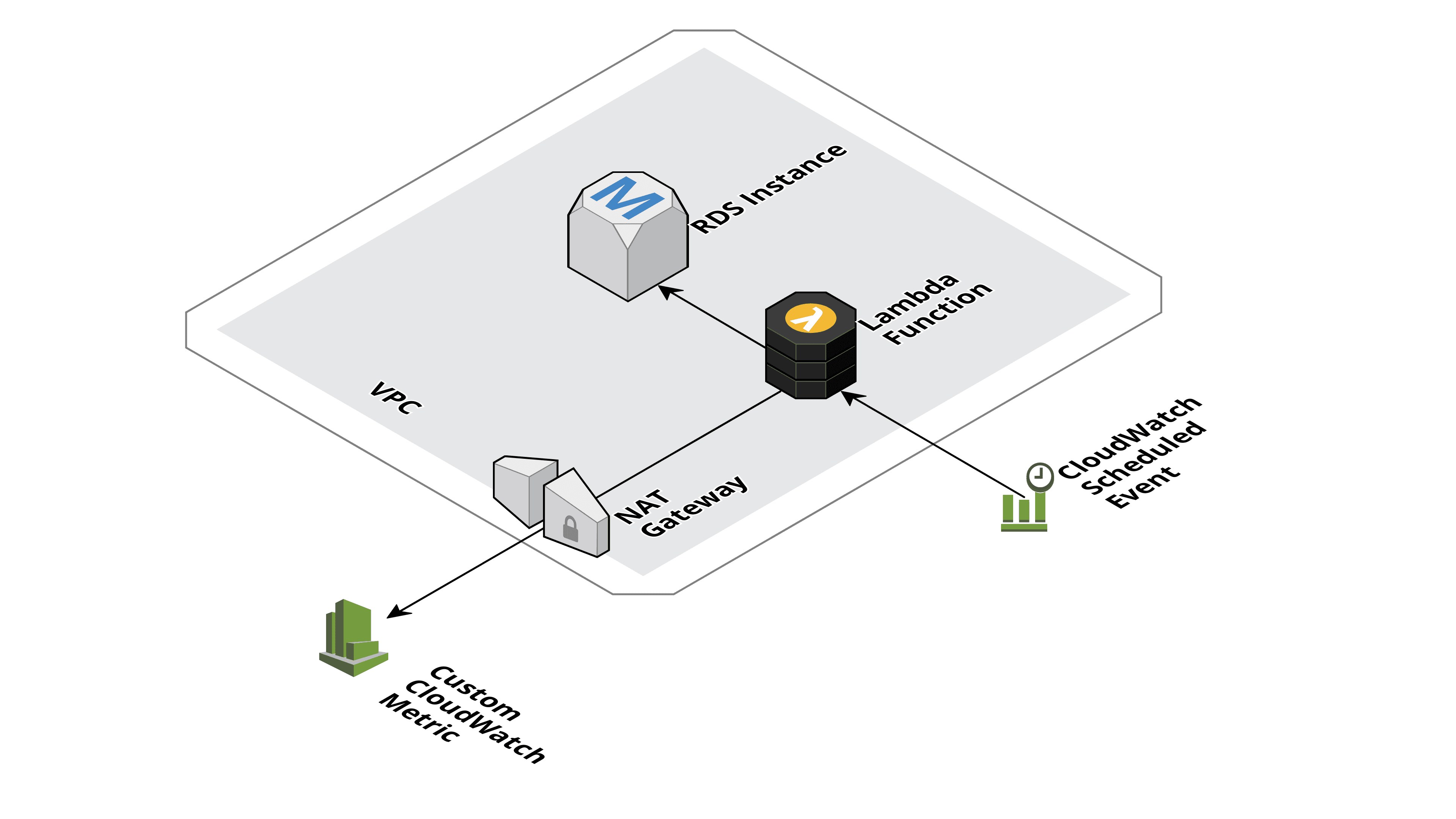
Serverless pattern: accessing public and private resources
Crossing the chasm between the old world - virtual machines isolated within a private network - and the new world - Serverless making use of publicly accessible APIs only - can be tricky. On the one hand, it is possible to configure VPC access for AWS L...
Read more
Configure your CloudFormation managed infrastructure with Parameter Store and CodePipeline
Getting started with CI/CD to manage your AWS infrastructure is hard: You have to familiarize yourself with the available technologies. You have to create a Proof of Concept to show your team how it works. You have to convince your team to stop us...
Read more
Burst credits of t2 EC2 instances need monitoring
EC2 is one of the fundamental services on AWS. If you are not 100% Serverless, your application health depends on the health of your EC2 instances. When I do AWS architecture reviews for our clients, I check that CPU burst capacity is monitored for EC2 ...
Read more
New CloudFormation Templates - Store your state
We help numerous clients to automate AWS with the help of CloudFormation. As you can imagine, we can reuse CloudFormation templates across clients. The template library comes with several advantages: Higher quality: we continuously improve the template...
Read more